
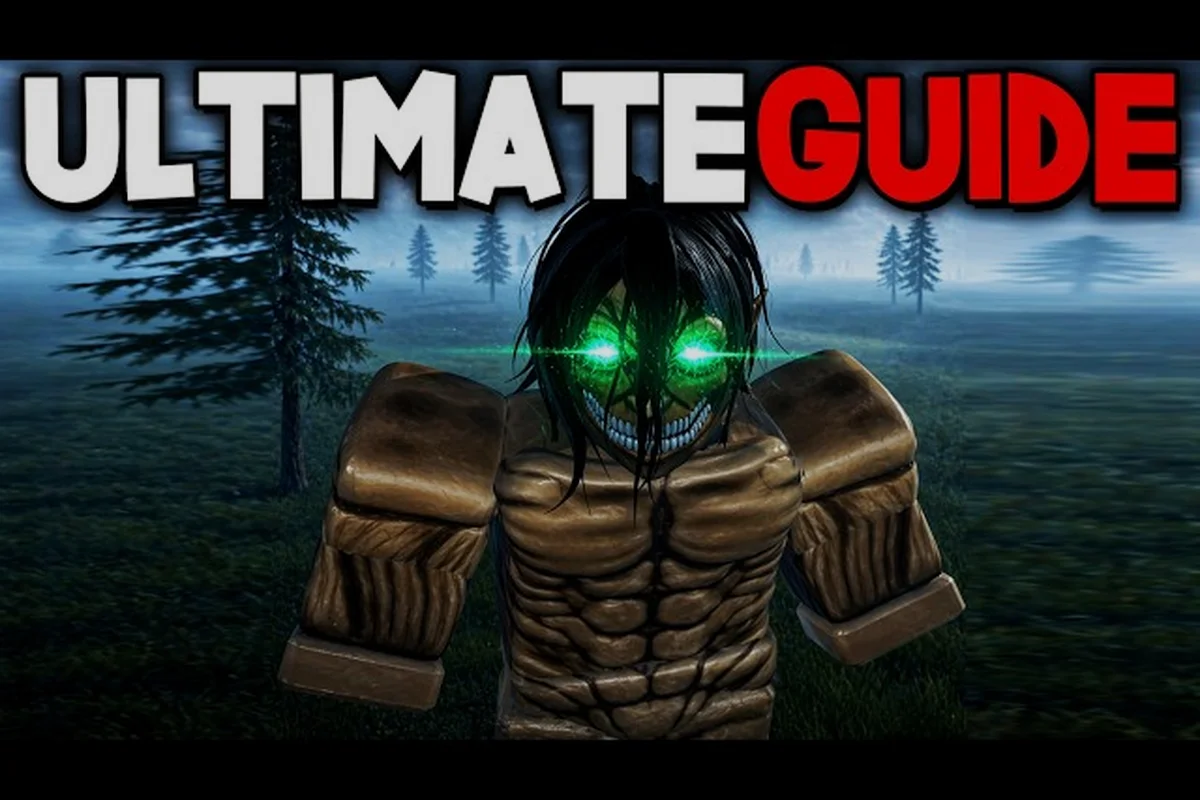
The Attack on Titan Revolution wiki is useful because it organizes missions, ODM gear, progression rewards, and group bonuses in one place. This guide turns those systems into a practical reference for faster leveling, smarter gear choices, and more rewarding group play.
Wiki: Core Systems and Progression
The Attack on Titan Revolution wiki is most useful when it serves as a map of the game’s interconnected systems rather than a simple list of rewards. Missions provide experience and Gold, ODM gear changes your combat options, and group membership can improve both currencies over time. Understanding how those pieces connect makes progression easier to plan.
Attack on Titan Revolution is a Roblox game by AoTR [PI], so the systems described here refer specifically to that experience and not to other Attack on Titan games on the platform. The game supports activities involving Titans, gear progression, character-related choices, and group play, although some advanced details remain community-tested rather than formally documented.
Understanding the progression loop
A simple progression cycle looks like this: complete repeatable missions, spend earned Gold on useful gear, level up your character, and then take on stronger content. Group play accelerates this loop through a permanent 5% XP and Gold group bonus, while alternate activities can provide different sources of experience.
| Progression source | Primary reward | Best use | Key consideration |
|---|---|---|---|
| Story and mission objectives | XP and Gold | Early progression | Prioritize missions that unlock new systems |
| Repeatable activities | XP, Gold, or resource rewards | Farming after unlock | Check the daily or weekly limit |
| Group membership | Bonus XP and Gold | Long-term account progress | Maintain a group with consistent members |
| Combat missions | Character experience | Power growth | Balance gear upgrades against mission difficulty |
Mission progression should be treated as the foundation because it introduces mechanics while awarding the resources needed for gear. Group progression begins after the basic mission loop is understood, since the permanent group bonus then adds value without replacing core rewards. Gear progression remains valuable because a stronger loadout can make later activities more efficient.
This Attack on Titan Revolution guide avoids presenting every available activity as equally important at every stage. A beginner generally benefits more from completing missions, learning the combat loop, and avoiding unnecessary spending than from chasing every possible reward. Once those basics are stable, advanced systems become easier to use. The Attack on Titan Revolution controls guide explains how to adjust movement, camera, and related settings. Learning those options early can prevent avoidable difficulty, especially when attacks rely on precise movement and timing.
Opening Session Walkthrough
-
Complete the introductory missions in the order shown by the interface.
-
Equip every starter item that improves a useful combat attribute before opening the shop.
-
Join or create a group as soon as that feature becomes available.
-
Direct spare Gold toward gear that improves your current playstyle rather than a broad collection.
-
Record which missions remain available for repeat play after the story objective is finished.
-
Test the controls in a low-risk area before attempting a harder Titan encounter.
Missions, Combat, and ODM Gear in the Attack on Titan Revolution Wiki
Missions and ODM gear form the clearest connection between earning rewards and becoming more effective in combat. Missions supply experience and Gold, while gear determines how efficiently you can attack, move, and survive. An Attack on Titan Revolution tutorial should therefore explain both what to earn and what to do with the resulting currency.
Mission categories and decision points
Mission menus can change as progression advances, so players should read each mission’s objective, recommended power, and reward panel before starting. The key decision is whether a mission advances the account, offers a repeatable reward, or serves as a short activity for gathering resources.
| Mission type | Best moment to use it | What to check first | Common mistake |
|---|---|---|---|
| Story mission | Beginning of the account | Unlock requirements and dialogue | Rushing past tutorial mechanics |
| Combat objective | When basic controls are familiar | Recommended power and rewards | Entering with a mismatched build |
| Repeatable mission | After the first clear | Daily limit and reward amount | Farming before its reset |
| Group activity | When members are available | Member count and difficulty | Leaving a useful group early |
| Bonus objective | When it does not block core missions | Extra reward conditions | Ignoring required objectives |
Recommended power should be treated as a warning rather than a promise. A character can exceed the displayed recommendation, yet still perform poorly if the chosen gear is poorly matched or movement is inefficient. Conversely, being slightly under the number does not make an objective impossible if the player understands the encounter.
Objective completion matters because partial progress often produces fewer rewards than a clean clear. Read the requirements before entering, because abandoning a mission at the final stage can waste time and resources. Players should also remember that some bonuses are connected to group status rather than individual performance.
Which ODM Gear to Upgrade First
ODM equipment choices are best judged by the role they support. Speed helps players create distance and reach weak points, while stronger attacks improve the damage of each successful hit. Protection and resource efficiency are especially valuable when the mission rewards survival or completion more heavily than speed.
| Equipment decision | Better when... | Practical benefit | Buying guidance |
|---|---|---|---|
| Prioritize speed | You need mobility or positioning | Faster approaches and escapes | Buy a modest upgrade first |
| Prioritize attack | Your goal is quicker damage | Higher damage per strike | Compare against mission difficulty |
| Prioritize defense | Survival is your current bottleneck | Extra room for mistakes | Upgrade after basic needs |
| Balance attributes | No single weakness is obvious | More consistent performance | Avoid expensive all-around gear |
Gear value means more than the largest number shown in a shop. Two items can have similar headline stats but different secondary attributes, and one may fit the current mission better. Compare the full item description, especially when upgrading an item that will be used across multiple activities.
Upgrade order should begin with the piece that causes the clearest gameplay problem. If attacks are too slow, improve damage or the relevant weapon category. If mobility is poor, speed or control should come first. This approach prevents a common early-game mistake: buying several small upgrades in unrelated categories without creating a meaningful change.
Using Gold without wasting it
Gold is easiest to manage when spending follows mission needs. Players should keep enough currency for the next planned upgrade, then spend the remainder on a meaningful improvement rather than filling every empty inventory slot. This approach also makes the Attack on Titan Revolution wiki more actionable because reward totals can be connected directly to a short-term shopping list.
| Spending stage | Recommended action | Why it works |
|---|---|---|
| Early game | Upgrade core gear only | Keeps important stats competitive |
| Mid game | Improve the weakest combat category | Reduces inefficient attempts |
| Late game | Compare full builds before buying | Avoids duplicate upgrades |
| Between resets | Bank surplus Gold | Preserves progress for limited rewards |
Bank surplus Gold when there is no clear upgrade, because it prevents rushed purchases after a new mission unlocks. Players should also verify that an item is actually equipped before selling older gear; the Equipped Loadout can make it easy to overlook one high-level item.
Guide to Groups, Rewards, and Daily Priorities
Groups are one of the simplest systems to activate and one of the most valuable to understand. The game provides a permanent 5% XP and Gold group bonus for eligible group members. This reward changes how players should think about daily missions, since joining a stable group can improve the return from normal progression without requiring complicated item management.
How the permanent group bonus works
The permanent group bonus applies to eligible experience and Gold rewards while the player remains in an eligible group. Because it is permanent rather than a temporary event, the best strategy is to make group membership part of the routine instead of remembering a limited-time multiplier.
| Group priority | Recommended action | Expected benefit |
|---|---|---|
| First priority | Join an eligible group before farming | Access to the permanent group bonus |
| Second priority | Choose a group with active members | More reliable access to group content |
| Third priority | Keep the group stable | Fewer interruptions during reward farming |
| Fourth priority | Check bonuses after joining | Confirm the active group is recognized |
| Fifth priority | Return after major changes | Verify the bonus still appears |
5% XP and Gold group bonus should be verified inside the game after joining. A player may have a group selected while the group lacks enough eligible members, or the relevant feature may not be available in that activity. Confirming the interface prevents assumptions from replacing actual information.
Group activity may require more organization than ordinary missions. Members should agree on a pace that allows weaker players to contribute, while stronger players can cover difficult targets. This approach is more reliable than assuming maximum damage is the only useful contribution.
A repeatable daily routine
A productive day does not require playing continuously. For example, a 20-minute session can be more valuable than an hour of random combat if you use it to complete a time-limited mission, collect available Gold and experience rewards, and invest in a character upgrade that fixes a current progression bottleneck. The goal is to improve the next session, not to exhaust every available objective or spend resources immediately.
-
Join an eligible group and verify that the permanent bonus is displayed.
-
Clear priority story or mission objectives that unlock additional content.
-
Choose repeatable missions with meaningful Gold or experience rewards.
-
Review the character panel and spend only on a clearly useful upgrade.
-
Return to missions that were blocked by weaker gear or missing progress.
-
Check daily limits before assuming a mission can be farmed again.
This Attack on Titan Revolution tutorial sequence keeps combat, economy, and social systems connected. It also makes the day easier to stop and resume, because each task produces a visible result rather than leaving the player to wander between unclear menus. The best shifter selection guide can help players compare characters for raid-oriented content. That choice should follow the mission requirement rather than a general preference, because the strongest-looking character may not suit the encounter’s mechanics.
When to focus on missions or group farming
| Situation | Best focus | Reason |
|---|---|---|
| New unlock available | Mission objectives | Progression gates come first |
| Gear is far below the recommendation | Gear improvement | Stronger gear reduces wasted attempts |
| Core missions are complete | Repeatable group farming | The permanent bonus improves rewards |
| Daily reward available | Claim before resetting | Time-limited access has higher priority |
| Group members are inactive | Solo missions | Consistent progress beats waiting |
Unlock priority should take precedence over repetitive farming because new systems can open stronger rewards. However, once the account is developed, farming becomes more efficient, especially with the group bonus active. Players who rush both directions often arrive at a balanced point with neither enough strength nor enough resources.
Running Missions Efficiently
Useful Attack on Titan Revolution tips focus on small decisions that improve each attempt: choosing the right mission, upgrading the correct attribute, and returning to group content when the bonus is active. These actions are easy to apply and help new players avoid wasting Gold or repeating missions with an outdated loadout.
A repeatable mission decision checklist
Before selecting a mission, check the recommended power, current objectives, available rewards, and completion limits. If the character exceeds the recommendation, examine whether the build still meets the mission’s special conditions. A quick comparison prevents common mistakes before the player spends stamina or time.
| Question before starting | Yes | No |
|---|---|---|
| Does the mission unlock something new? | Prioritize it | Continue reviewing |
| Is my loadout appropriate for the enemies? | Start the mission | Upgrade or adjust gear first |
| Are repeat rewards still available? | Complete it now | Mark it for the next reset |
| Will an eligible group increase my rewards? | Join the group first | Farm solo if necessary |
| Can I complete every objective? | Read the full list | Track the missing requirement |
Objective checklist should be kept visible during longer activities. Missing a condition at the end can turn a successful run into a partial reward. Players who routinely clear difficult encounters should also review whether the mission offers a group bonus, because that changes the value of every eligible reward.
Build decisions that affect real performance
A strong build is one whose attributes support the player’s repeated tasks. Damage is obvious, but speed, defense, control, and resource efficiency can determine whether an encounter is completed cleanly. Because Attack on Titan Revolution includes several character and progression choices, players should compare the full stat package rather than a single headline number.
Gear synergy occurs when two equipped items support the same goal. For example, mobility paired with attack can create a faster burst pattern, while defense paired with control can reward precise positioning. The best combination depends on the player’s experience and mission type, so community builds should be treated as starting points rather than mandatory recipes.
Stat priority should also change when the account reaches a new phase. Early players may need enough power to finish basic missions, whereas later players often benefit from efficiency that allows faster clears and more attempts during a limited reward window. This is why the Fritz build overview is most useful as a progression reference rather than a one-size-fits-all answer.
Avoid common progression mistakes
-
Spending Gold before identifying the mission that requires better gear.
-
Leaving a group bonus active in the interface without confirming that it applies.
-
Equipping a lower-ranked item only because it has one attractive stat.
-
Repeating an easy mission when a limited objective is still available.
-
Chasing an unconfirmed character or Titan instead of using playable options.
-
Selling spare equipment without checking the full equipped loadout.
Unconfirmed content deserves special attention. Community showcases have reported possible Divine perks, Vessel-related unlocks, and a Beast Titan unlock process, but these details come from player testing rather than official patch notes. Treat them as possible leads, not confirmed requirements, and avoid planning a major resource investment around them.
Similarly, Warhammer Titan footage has appeared in older trailers, but its playable status remains unconfirmed. Treat the footage as a lead for the Attack on Titan Revolution wiki rather than a verified roster entry: community reports may document a Warhammer Titan encounter or unlock animation, yet they do not establish the required level, material costs, gear restrictions, or release state. Until official patch notes confirm those details, prioritize accessible Titans and confirmed progression objectives instead of reserving scarce materials for a character that might never enter normal play.
Verified Codes, Rare Unlocks, and Community-Reported Progression
Some progression resources are easy to confuse with permanent systems. Codes provide temporary rewards, while rare unlocks and prestige features may depend on specific community-tested conditions. The Attack on Titan Revolution wiki should clearly distinguish official or visible game systems from player reports and footage.
Codes and temporary rewards
Only one code is currently verified as active: LIKES1M400K. Community-era strings such as WZINS, TERRA70K, UPDATE5SOON, and LIKES1M350K have expired and should not be entered as substitutes when a current reward is available. For example, seeing LIKES1M350K in an older Attack on Titan Revolution code list does not make it equivalent to the newer LIKES1M400K code; if redemption fails, use the verified active entry rather than cycling through outdated character combinations.
| Code status | String | Action |
|---|---|---|
| Verified active | LIKES1M400K | Redeem it in the game |
| Expired | WZINS | Do not rely on it for current rewards |
| Expired | TERRA70K | Ignore older code lists |
| Expired | UPDATE5SOON | Check for a future published replacement |
| Expired | LIKES1M350K | Use the newer verified code instead |
Active code status can change, so the in-game code interface remains the final authority for whether a reward was applied. The current working codes list provides the active redemption details, while expired entries should be retained only to prevent confusion.
A 1,450,000-like reward has been referenced by the community, but no published code string for that reward has been verified. Players should treat it as pending rather than enter an invented string. This distinction matters because fabricated code characters can spread quickly through shared lists and create false expectations.
Rare unlocks and community evidence
Several unlock details are attractive to players but require careful sourcing. The game’s official notices do not fully document every mechanic, so community gameplay can reveal systems before official patch notes explain them. Nevertheless, each claim should carry a qualifier. Players can consult the artifact guide for shifters when comparing permanent progression choices. That comparison should focus on the current character and mission, not on a universal ranking that ignores gear synergy.
| Claimed progression element | Current evidence | How to treat it |
|---|---|---|
| Divine perk | Community showcases | Test in-game before planning around it |
| Vessel unlock | Community-tested showcase | Expect possible requirements to vary |
| Beast Titan unlock | Community showcase | Verify each claimed requirement |
| Yeager chance at roughly 0.1% | Community-reported rate | Treat as a reported value, not a guarantee |
| Legendary clan chance at roughly 0.5% | Community showcase data | Use only as a reference estimate |
| Armored Serum at roughly 0.03% | Community-reported rate | Check the current in-game display |
| Maximum prestige level of 5 | Community-reported cap | Confirm after reaching prestige content |
Yeager rarity around 0.1% is a community-reported figure, which means the in-game roll and current version should take precedence. The same qualifier applies to the legendary clan rate of roughly 0.5%, the Armored Serum rate of roughly 0.03%, and the prestige cap of level 5.
Information labels for reliable decision-making
Use three labels when recording progression information. Verified in game means the player has seen the mechanic or reward in the current client. Community-reported means a player source supports the claim, but official notes do not confirm it. Trailer-only means footage shows something without establishing that it is playable.
| Evidence label | What it supports | What it cannot support |
|---|---|---|
| Verified in game | Current rewards and mechanics | Claims about future balance |
| Community-reported | A useful testing lead | Guaranteed rates or unlock certainty |
| Trailer-only | Visual awareness | A playable build recommendation |
Evidence labels make the Attack on Titan Revolution wiki more trustworthy because readers can immediately distinguish confirmed facts from possible changes. They are especially important when a patch alters Supply Drops, expedition rewards, troop-formation conditions, or unlock rates after publication. For example, a Verified in game reward can guide current farming decisions, while a Community-reported change should be treated as a testing lead until its drop rate or requirements are confirmed; Trailer-only footage may reveal an enemy visual, but not whether that enemy is actually accessible through expedition progression.
Wiki Maintenance and Learning Path
A useful Attack on Titan Revolution wiki should be updated as the game changes, but players can still learn a reliable progression path before every future update is understood. The best method is to separate permanent controls from temporary rewards, verify uncertain claims in the client, and revise routines when a patch changes the underlying systems.
A learning path for new and returning players
New players should establish the basics first, while returning players can audit their habits instead of restarting from zero. The goal is not to memorize every menu but to understand which actions reliably produce progress: for instance, learning ODM gear controls and early mission unlocks supports steady advancement, whereas reviewing stats, Gold, and group membership helps experienced players remove inefficient routines. Understanding this progression order lets players direct time toward permanent upgrades before spending it on rare drops or temporary codes.
| Player stage | Main objective | Priority systems |
|---|---|---|
| New account | Learn combat and complete early missions | Controls, ODM gear, mission unlocks |
| Early progression | Build a stable first loadout | Stats, Gold, group membership |
| Mid progression | Access stronger repeatable content | Missions, artifacts, character selection |
| Advanced progression | Improve efficiency and investigate rare systems | Prestige, rare drops, community reports |
Permanent systems deserve attention because they remain useful regardless of a code event or temporary update. For example, the table’s early-progression objective is to build a stable first loadout, so mastering ODM gear controls, Stats, and Gold before pursuing artifacts reduces wasted resource spending. Likewise, group membership and mission unlocks should be handled before committing to rare drops, because repeatable missions and group benefits continue supplying progression when limited-time rewards expire.
Temporary systems should be treated as time-sensitive because redeemable codes, limited-time events, and bonus rewards can expire before a player finishes their next mission cycle. For example, claiming a code before upgrading Stats or ODM gear may grant a useful boost, but spending scarce resources on it instead of strengthening a stable loadout can slow later mission clears. A balanced schedule preserves repeatable progression from missions, artifacts, and character selection while reserving part of each session for codes and limited events, rather than letting temporary rewards displace permanent upgrades.
A repeatable knowledge check
Before trusting any progression guide, ask these questions: A reliable Attack on Titan Revolution guide should identify whether its advice applies to Story Mode, missions, or the anime-inspired seasonal events in the current Roblox client by AoTR [PI]. For example, a recommended gear-stat build should state the exact attribute being improved—such as attack, speed, or gearing capacity—rather than merely call a setup “strong.” A useful Attack on Titan Revolution tutorial should also timestamp nonpermanent information, because mission objectives, reward rates, and active codes can change after a game update. Comparing two progression paths without matching their mission requirements or stat criteria can produce contradictory advice, so each claim should be verifiable against the current client before readers incorporate it into their build.
-
Does the guide refer specifically to the Roblox game by AoTR [PI]?
-
Is each important mechanic visible in the current game client?
-
Are community rates labeled as reported values?
-
Does the guide separate playable content from trailer footage?
-
Does it distinguish an active code from an expired one?
-
Can each recommendation be connected to a mission, reward, or stat?
These checks give the Attack on Titan Revolution wiki a clear review trail, preventing copied drop rates, obsolete mission requirements, and unsupported stat builds from passing as confirmed information. For example, a wiki entry for a gear-stat build should link its recommended attribute increase to a specific mission reward, while a community-reported damage rate should be labeled as a reported value rather than a verified stat. That distinction matters because mission objectives, reward rates, and active codes can change after a Roblox client update. Recording the date and source also lets returning readers determine whether an Attack on Titan Revolution guide still reflects Story Mode or current seasonal events.
Keeping notes without wasting time
A compact personal record is more effective than a long spreadsheet. Track the current loadout, preferred missions, group status, code status, and any unverified claim that still needs testing. Update the notes after major changes, not after every minor fight.
| Note category | What to record | Why it helps |
|---|---|---|
| Loadout | Best gear for each role | Speeds future comparisons |
| Missions | Best reward and reset timing | Prevents low-value farming |
| Group | Eligible members and bonus status | Supports the 5% reward boost |
| Codes | Active and expired status | Avoids repeated invalid entries |
| Community claims | Source and test result | Separates evidence from rumor |
Verification notes should include the date and current game version when possible, even if this article does not add a new body date on every update. A quick note that a claim changed after an update is often more valuable than a long explanation of the old claim.
Frequently Asked Questions
What should new players learn first in Attack on Titan Revolution?
New players should learn the controls, complete the introductory missions, and establish a usable ODM loadout before focusing on advanced rewards. Missions teach combat objectives while providing the experience and Gold needed for upgrades. Joining an eligible group early is also useful because its permanent 5% XP and Gold bonus improves eligible farming without requiring complicated setup.
Is LIKES1M400K an active Attack on Titan Revolution code?
Yes. LIKES1M400K is the only code currently verified as active. WZINS, TERRA70K, UPDATE5SOON, and LIKES1M350K are expired, while no published string has been verified for the community-referenced 1,450,000-like reward. If redemption fails, check for capitalization and confirm that the code is entered through the in-game redemption interface.
Does joining a group always provide the 5% reward bonus?
An eligible group provides a permanent 5% XP and Gold bonus, but the player should confirm that the group is recognized and that the activity permits the bonus. A group interface alone may not guarantee eligibility if the required member count is not met. Checking the bonus display before starting a repeatable mission prevents wasted farming time.
Are the rare unlock rates in the Attack on Titan Revolution wiki official?
The listed rare rates are community-reported, including figures of roughly 0.1% for Yeager, roughly 0.5% for a legendary clan, and roughly 0.03% for Armored Serum. They should not be treated as guaranteed official rates because the in-game display is the better source. Divine perks, Vessel unlocks, and the Beast Titan unlock also come from community showcases rather than official patch notes.
Can players confirm the Warhammer Titan is playable in the game?
No confirmed playable status has been established. A Warhammer Titan appeared in older trailer footage, but trailer footage does not prove that it can be selected or used in current missions. Players should rely on the current character and Titan menus, and they should avoid investing resources around the appearance until official information or direct in-game access supports it.