
The best Attack on Titan Revolution artifact for shifters depends on the effect you need: prioritize attack power for maximum damage, stamina or HP regeneration for longer sustain, and crowd-control bonuses such as knockback or immobilization for safer transformations. Compare these artifact effects with your equipped Memories, since a strong memory can provide permanent stat bonuses and trait-based advantages that determine whether the final shifter build excels in damage, survivability, or control.
Shifter Artifact Evaluation: Which Effect Fits the Build?
The Attack on Titan Revolution best artifact for shifters is not automatically the item with the largest number. Artifacts provide modifiers tied to particular content and build needs, so the strongest choice is the one that improves a weakness without forcing a second unrelated system into your loadout. That matters because a shifter can transform during a mission, switching between human combat and a Titan form that may not benefit from the same bonuses.
Begin by separating three questions: Does the effect improve the human form, the Titan form, or both? Does it reward the attacks you already perform? Does it create a stronger pairing with your equipped Memory and family bonuses? An Artifact that is excellent in a standard ODM setup can feel weak if its condition never occurs during a Shifter encounter.
| Evaluation factor | Strong Artifact behavior | Weak Artifact behavior |
|---|---|---|
| Trigger frequency | Activates often during normal attacks | Requires rare or situational events |
| Build compatibility | Supports the chosen family and Memory | Conflicts with equipped bonuses |
| Form coverage | Improves human attacks, Titan attacks, or both | Only helps while transformed |
| Upgrade value | Remains useful at higher tiers or rolls | Loses value when its condition expires |
| Equipment cost | Frees another useful slot | Forces the removal of a better option |
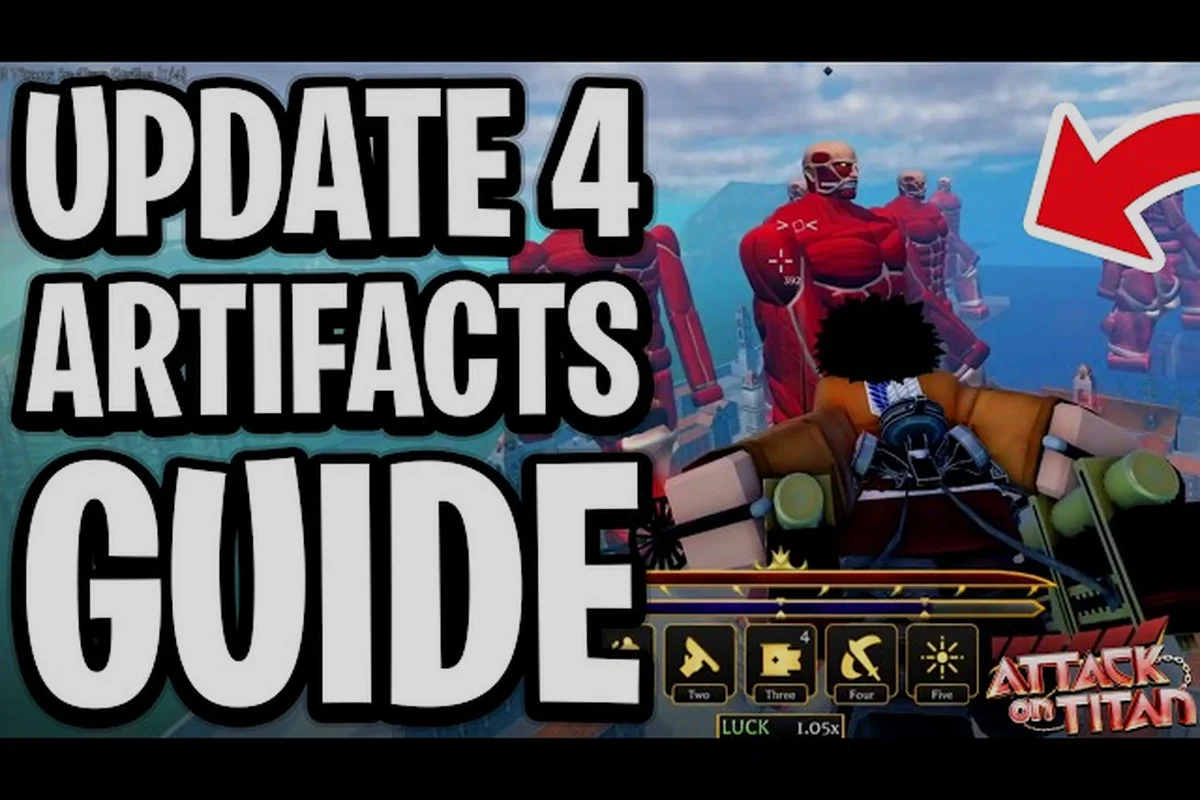
The verified AoTR-PI Roblox community page notes that Artifact farming follows content rather than pure random drops. The Update 4 Artifact guide by JustBOZ also presents the current pool through individual effects rather than treating every newly released item as an automatic upgrade. Both support a slot-based evaluation: choose the modifier that your current equipment cannot provide.
Separate Shifter Combat Phases
A Shifter encounter usually contains two distinct performance checks. In human form, you need reliable damage, mobility, and enough sustain to survive an enemy with a large health pool. After transforming, your priorities may change because the Titan form uses different attacks and timing. The Artifact should reward at least one phase without becoming irrelevant during the other.
| Combat phase | Most valuable Artifact qualities | Common mistake |
|---|---|---|
| Human form | Attack damage, critical chance, cooldown, or survivability | Equipping an effect that only activates as a Titan |
| Titan form | Form damage, impact, skill timing, or broad damage bonuses | Relying on human-form bonuses that stop applying |
| Transition period | Defense, resource retention, or stability | Treating transformation as a free pause |
| Full encounter | Consistent uptime and simple activation conditions | Chasing an effect with a narrow trigger |
Form uptime is the most important concept. An effect that activates on every successful hit can outperform a larger bonus with a complicated condition because it contributes across both phases. That is especially useful when you are testing a new family or memory and want clean evidence about what improves your performance.
Artifact vs Memory: Choosing the Right Upgrade Source
The Attack on Titan Revolution artifact vs memory decision comes down to permanence, scaling, and how the effect activates. An Artifact is an equipment modifier obtained from specific content, while a Memory is a separate item system associated with rolls, slots, and rerolls. Neither system automatically dominates the other.
Memories are especially attractive when you want a focused stat package or a synergy with a particular weapon. Artifacts are valuable when they change how combat works or fill a slot with an effect that your Memory cannot supply. Comparing them through a memory tier list helps identify which bonuses are worth preserving, but the final choice still depends on your equipped family and combat style.
| Comparison factor | Artifact | Memory |
|---|---|---|
| Acquisition | Tied to designated content and Artifact routes | Obtained through Memory sessions and rolls |
| Refinement | Usually managed through Artifact upgrades | Can be rerolled and evaluated by slot |
| Effect style | Often changes a combat condition or provides a package | Commonly provides focused stats and build bonuses |
| Best use | Filling a missing type of effect | Reinforcing the core weapon and stat plan |
| Main risk | Taking a strong effect for the wrong trigger | Investing heavily in a bonus that conflicts with the build |
The Attack on Titan Revolution memory tier list should be used as a decision aid, not an isolated ranking. A lower-tier Memory with the exact stat you need can outperform a rarer option that sends you toward an unwanted playstyle. Meanwhile, a strong Artifact may remain valuable even when it does not show a large number because its effect fills a special condition in the encounter.
Where Memories Have the Clearer Advantage
Memories are the cleaner choice when your main objective is to refine a familiar setup. They fit naturally into slot management, and the dedicated Memory Reroll guide explains how reroll decisions can be tied to specific bonuses instead of repeated random attempts. If you already know that your setup needs critical chance, attack speed, or a weapon multiplier, a well-matched Memory can be more dependable than an Artifact designed for a different trigger.
Legendary Memories also provide a meaningful rarity milestone, but legendary alone does not make them optimal. Evaluate the stat package, the selected slots, and the weapon you use most often. A Legendary Memory that supports your primary attack pattern is often more valuable than a higher-rarity Memory whose bonuses compete with your family passive or Artifact effect.
| Memory objective | Recommended evaluation |
|---|---|
| Improve critical damage | Compare the exact critical stat and its connection to your weapon |
| Support Thunder Spears | Prioritize bonuses that remain useful during heavy attacks |
| Strengthen ODM attacks | Look for attack speed, damage, and mobility that reinforce sustained combat |
| Preserve reroll value | Keep several acceptable outcomes instead of pursuing one perfect roll |
| Fill a leftover slot | Select a compact bonus that does not distort the main build |
The Attack on Titan Revolution best memories depend on the same rule as any other gear decision: synergy beats rarity. Keep your core damage plan stable, then use remaining Memory slots for utility. Replacing a perfectly functional Memory merely because a community ranking places a different item higher can leave your actual performance unchanged or worse.
Where Artifacts Have the Clearer Advantage
Artifacts shine when they change combat behavior. They can reward a specific type of hit, improve a state that your build lacks, or provide a package that reduces the value of a narrow stat total. Their value also depends on the content route: because Artifact drops are connected to specific modes, farming the right type of content is part of obtaining the upgrade.
The best Artifact is therefore often the one that lets you keep a strong Memory rather than replace it. If your Memories already cover damage and critical output, an Artifact with a different trigger can provide the missing layer. If your Memories have broad but weak bonuses, an Artifact with a focused package may produce a clearer performance gain.
Do not compare item names in isolation. Compare the complete sequence: family passive, Memory bonuses, Artifact effect, weapon behavior, and the encounter that produced the drop. A complete sequence can make a moderate Artifact outperform a premium item because every part of the build reinforces the same attack.
Practical Shifter Artifact Choices by Combat Style
A practical recommendation needs more than a tier label. The right Artifact for a Shifter should activate during the phase where you spend most of the encounter and should preserve your strongest Memories. It also needs to work against the target types listed in the Titan Shifters overview.
Community Artifact guides distinguish effects by their trigger rather than promising one universal winner. The verified Update 4 Artifact guide from JustBOZ is useful for checking individual effects, while the Attack on Titan Revolution best artifact for shifters decision should still be made through a controlled combat test.
| Player style | Preferred Artifact direction | Best Memory pairing | Reason |
|---|---|---|---|
| Critical-focused | Consistent critical or damage-triggered effect | Critical damage and attack-speed bonuses | Rewards frequent human and Titan attacks |
| Thunder Spear-focused | Broad hit or heavy-attack modifier | Damage bonuses that remain active during Titan form | Supports slower, heavier combat rhythm |
| Survival-focused | Defense, lifesteal, or sustain effect | Mobility and balanced damage bonuses | Extends the encounter without sacrificing all offense |
| Burst-focused | Conditional high-damage effect | Stable base damage and critical chance | Creates a stronger burst when the condition is met |
| Generalist | Broad damage or uptime effect | Flexible stat package | Reduces dependence on a single trigger |
Critical Shifter Loadout
A critical setup works best when the Artifact increases the value of attacks you can actually land. Narrow effects may look exciting, but they contribute little if most of the encounter is spent repositioning, transforming, or fighting around animation constraints. Pair the Artifact with Memories that improve the critical foundation rather than duplicating an unrelated bonus.
For shifters, the strongest Artifact is the one that improves crit damage, attack speed, or usable damage during the active portion of a Shift, not merely the largest displayed number. An effect that boosts melee damage is more valuable when it applies to every strike in a combo, whereas a transformation-only bonus may sit idle if you spend most of the encounter dodging or repositioning. Artifact and Memory bonuses also stack: pair crit rate or crit damage with an offensive Memory so the Artifact’s contribution becomes part of a complete damage build, rather than relying on an unrelated secondary stat.
-
Equip your established weapon, family, and strongest Memory.
-
Add the candidate Artifact without changing anything else.
-
Fight the same target type at a similar difficulty.
-
Record damage windows, transformation uptime, and wasted attack opportunities.
-
Keep the Artifact only when its benefit appears consistently.
Critical consistency is the benchmark. A slightly lower peak that activates during the full encounter is usually stronger than an effect that reaches a large number during one brief window. For example, an Artifact that keeps the same critical damage bonus active throughout repeated Shift attacks can outperform a higher crit-damage increase that disappears between combo strings, especially when transformation uptime is limited by dodging and repositioning. Track whether the bonus applies during normal strikes, aerial attacks, and each segment of the Shift combo; if it only covers one attack sequence, its real encounter value may be much lower than its displayed peak.
Thunder Spear Shifter Loadout
Thunder Spears create a different rhythm from fast ODM attacks, so their Artifact should improve reliable heavy hits instead of rewarding rapid strike frequency. Memories that increase damage without demanding continuous precision are often the better pairing. If your Artifact offers a broad effect, it can smooth the gaps between heavy attacks without requiring you to abandon the weapon.
The strongest candidate is the one that remains useful while you are in Titan form. Test it against a target that encourages repeated transformation as well as one that allows a longer transformed window. A setup that looks excellent in human form may contribute little after transformation, so measure the entire encounter rather than stopping after the first burst.
General-Purpose Shifter Loadout
A general-purpose setup should favor uptime, dependable damage, and survivability. This is often the most practical choice for players who rotate families or Memories while waiting for stronger drops. One Artifact should not force the entire account toward a narrow specialization unless it unlocks a clearly stronger damage pattern.
Keep a simple rule: if the Artifact changes your behavior in a way you can repeat, it is easier to use well. A familiar effect that activates during most attacks often creates more total value than a rare burst that demands perfect timing.
How to Get Memories and Test Artifacts Efficiently
Understanding Attack on Titan Revolution how to get memories helps you avoid replacing solid Memories merely because you found a new Artifact. Memory farming is tied to rolls, which means luck potions and a planned session schedule can improve efficiency. The verified Roblox community page specifically distinguishes Memory sessions from content-based Artifact farming, so the two routes should be scheduled separately.
Start by identifying the weakest part of the current build. If your damage is adequate but your transformation window is short, focus on an Artifact with a reliable trigger. If your Artifact already covers that need, farm Memories for the missing stat. This prevents the common mistake of farming both systems at random and evaluating the result without knowing which change caused the improvement.
| Weekly improvement path | Primary target | Secondary target | Suggested check |
|---|---|---|---|
| Build foundation | Strong family and weapon synergy | One dependable Memory | Test basic encounter consistency |
| Damage expansion | Artifact with a recurring trigger | Critical or weapon Memory | Compare total damage across phases |
| Endurance | Sustain or defensive Artifact | Mobility Memory | Record survival without excessive upgrades |
| Final refinement | Reroll one flexible Memory slot | Keep strong Artifact effects | Change one variable per test |
| Long-term farming | Target missing Artifact content | Improve Memory roll quality | Stop when the marginal gain is small |
Separate Artifact and Memory Farming Sessions
Artifact runs and Memory sessions do not use the same logic. Artifact routes follow the content that can drop the desired item, while Memory results depend on rolls and are better handled around luck-boosting resources. The community page also reports that group membership can provide five percent more XP and five percent more Gold, while the server cap is 20 players. Those factors matter when a longer session can preserve the group bonus instead of cutting it short.
| Session type | Primary goal | Best decision rule | Avoid |
|---|---|---|---|
| Artifact session | Obtain a specific effect | Stop when the needed slot is filled | Collecting duplicates without a plan |
| Memory session | Secure a useful stat package | Accept several strong outcomes before chasing one | Wasting resources on a narrow roll |
| Weapon session | Improve the core attack pattern | Keep gear changes separate from Artifact tests | Changing every variable at once |
| Group session | Extend efficient farming time | Keep the group bonus active where possible | Leaving early without evaluating rewards |
The best testing method is controlled comparison. Keep one loadout fixed while you evaluate a candidate, then repeat the test with only that item changed. This is especially important for conditional Artifacts because team support, target behavior, and transformation timing can otherwise distort the result.
Read Community Reports With the Right Context
Community testing is valuable for confirming that an effect behaves as players expect, but it should be labeled as community evidence. Divine Perk, Vessel, and Beast Titan unlock details come from community showcases rather than official patch notes, so related assumptions should be treated cautiously. The same standard applies to Artifact rankings: a player’s result may reflect a different family, weapon, Memory, or difficulty.
Check each community report for the shifter family and equipment used, then isolate the Artifact’s effect from the Memory and weapon bonuses. For example, a Beast Titan result should not be treated as proof for Pure Titan, Colossal Titan, or Female Titan builds, and a high-difficulty run should not be compared directly with an easy Story Mode test. Record the Artifact name, Memory tier, weapon, shift-form level, and baseline damage or survivability so the strongest Attack on Titan Revolution best artifact for shifters option can be identified without confusing gear synergy with an Artifact-only bonus.
-
Under what conditions does the Artifact activate?
-
Does the effect continue during the Titan form?
-
Is the recorded improvement larger than ordinary fight-to-fight variation?
If the source does not answer those questions, reproduce the setup before replacing an item. For example, test the same Artifact with the same Legendary Memory, weapon, shifter family, and shift-form level across three runs, recording damage, survival time, and whether the bonus persists after transformation. If the Artifact triggers only on a specific hit, compare its value with the Memory’s baseline bonus rather than treating the combined stat increase as Artifact-only performance. This protects your resources and makes your own Attack on Titan Revolution best artifact for shifters conclusion more reliable.
Shifter Artifact Upgrade and Slot Rules
The best Artifact rarely remains useful without slot management. Each occupied slot should represent a deliberate layer: offense, offense condition, sustain, or utility. Two effects that trigger under identical circumstances may feel stronger on paper while providing less practical coverage than one offense modifier and one defensive effect.
Begin with your non-negotiable Memory package, then choose an Artifact that complements rather than imitates it. Preserve one flexible slot if your build still needs testing. An Artifact can be upgraded or swapped more easily than a family, so it is often the best place to hold a temporary option while your Memories mature.
| Slot priority | What to place there | Example reason |
|---|---|---|
| Core offense | Main damage or critical effect | Raises the baseline during both combat phases |
| Conditional offense | Triggered Artifact effect | Adds power during a reliable attack pattern |
| Sustain | Defense or recovery effect | Protects against longer Shifter encounters |
| Utility | Speed, cooldown, or flexible bonus | Smooths transitions and repeated attacks |
| Experimental | Candidate Artifact | Tests an upgrade without rebuilding everything |
Preserve a Known-Good Loadout
Before replacing anything, save a clear reference of your current equipment. Record the family, weapon, Memories, Artifact, and relevant stats. This makes it possible to return to a functional setup if the new Artifact underperforms. It also prevents a misleading conclusion caused by accidentally replacing several pieces during one session.
A practical two-loadout approach works especially well: begin with a stable Artifact and Memory setup that already performs reliably, then create a test build by changing only the Artifact or one Memory slot. This isolates the effect of the new Shifter-focused Artifact without weakening unrelated stats. For example, if your current setup clears comparable missions, test the candidate Artifact against the same target type and Titan-form encounter before drawing a final comparison.
-
Stable loadout: Your best confirmed family, Memories, and Artifact combination for general missions.
-
Test loadout: The same foundation with one candidate Artifact or Memory slot changed.
Run each stable and test loadout against comparable targets, keeping combat time, mission difficulty, and enemy type unchanged. For example, if both builds clear the same Titan encounter within a similar time, their Artifact performance is broadly consistent. If the candidate Shifter Artifact produces a dramatic change after switching between Human and Titan form, inspect its activation timing and whether the effect lands before or after the Transformation effect resolves. A small performance gap may come from normal damage variance rather than the Artifact itself, so repeat the test on another target before replacing the known-good setup; otherwise, retain the stable combination and save the candidate Artifact for a more suitable encounter.
Upgrade for Trigger Quality, Not Size Alone
Artifact upgrades are most valuable when they improve a condition the build can reliably activate. A modest increase to a recurring effect can produce more total value than a large increase to a rare trigger. Before upgrading, ask how often the condition appears during a realistic encounter, not just how impressive the number looks in the inventory.
Upgrade efficiency means the expected contribution per resource spent. That requires considering activation rate, encounter length, and whether the effect helps human attacks, Titan attacks, or both. Keep two copies of a usable effect only when each can serve a different playstyle or target. Otherwise, redirect resources toward a missing effect instead of creating unnecessary duplicates.
The AoTR-PI community farming information also notes that artifact runs are tied to the mode that drops the item. Use that structure deliberately: farm the content connected to the slot you need, then evaluate the result in the encounter where you expect to use it.
Final Shifter Loadout Recommendations
The strongest final choice depends on your build’s missing effect. For critical players, select a recurring damage or critical condition and pair it with Memories that strengthen the same attack pattern. For Thunder Spear users, favor uptime and heavy-hit bonuses over rapid-trigger effects. Survival-oriented players should use an Artifact that adds sustain or defense while keeping strong damage Memories in place.
| Build goal | Artifact choice principle | Memory choice principle | Upgrade trigger |
|---|---|---|---|
| Maximum critical damage | Repeated activation with clear critical synergy | Focused critical damage and attack speed | Effect contributes during most attacks |
| Maximum Titan-form damage | Form-compatible damage condition | Stable damage without excessive conditions | Strong after transformation |
| Best all-purpose shifter | Broad uptime with dependable damage | Balanced damage and mobility | Consistent results across target types |
| Resource-efficient setup | Flexible effect that improves many encounters | One or two stable bonuses | Avoids duplicate slots |
| Experimental high roll | Exceptional condition with a clear test plan | Stable supporting package | Keep only after a controlled comparison |
The final recommendation is not to chase a universal item name. Identify the phase of the fight where your build loses the most value, then choose an Artifact that rewards activity during that phase. Keep Memories focused, retain a stable backup, and upgrade only after the effect proves reliable in real encounters.
That process is what separates a strong recommendation from a copied tier label. It gives you an Attack on Titan Revolution best artifact for shifters decision based on triggers, form uptime, and resource efficiency—the factors that determine whether an item actually performs during a Shifter fight.
Frequently Asked Questions
What is the best Artifact for a Shifter in Attack on Titan Revolution?
There is no verified universal winner for every Shifter. The strongest choice is the Artifact whose effect activates throughout your human or Titan attacks, complements your equipped Memories, and supports your family and weapon. A recurring effect often provides more total value than a larger bonus that rarely triggers, especially during a full transformation.
Should a Shifter prioritize Artifacts or Memories?
Prioritize the system that fixes your clearest weakness. Use Artifacts when you need a distinct trigger, defense, or combat package, and use Memories when your current build needs a focused stat improvement. If a Memory already solves the Artifact’s main benefit, keeping that Memory and equipping an Artifact for a different role is usually the stronger choice.
Which Memory is best for Critical Shifter builds?
The best Memory is the one that improves critical damage or attack speed without conflicting with your family and Artifact bonuses. A Legendary Memory can be excellent when its full stat package fits the build, but rarity alone does not make it better than a lower-tier Memory with more useful stats. Test the complete equipment combination.
Are Legendary Memories better than rare Artifacts for Shifter combat?
Not necessarily. Legendary Memories are valuable for focused stat packages and build refinement, while Artifacts can provide a unique activation condition or sustain effect. Compare what each item contributes to the complete encounter. A Legendary Memory paired with an unrelated Artifact may perform worse than a strong Memory supported by an effect that matches your attacks.
How should I test a new Artifact before replacing my current one?
Keep your family, weapon, Memories, and other gear unchanged, then test the candidate against the same target type at a similar difficulty. Record damage, survival time, and whether the effect activates during both human and Titan phases. Replace the current Artifact only when the improvement is consistent rather than the result of one unusually favorable encounter.