
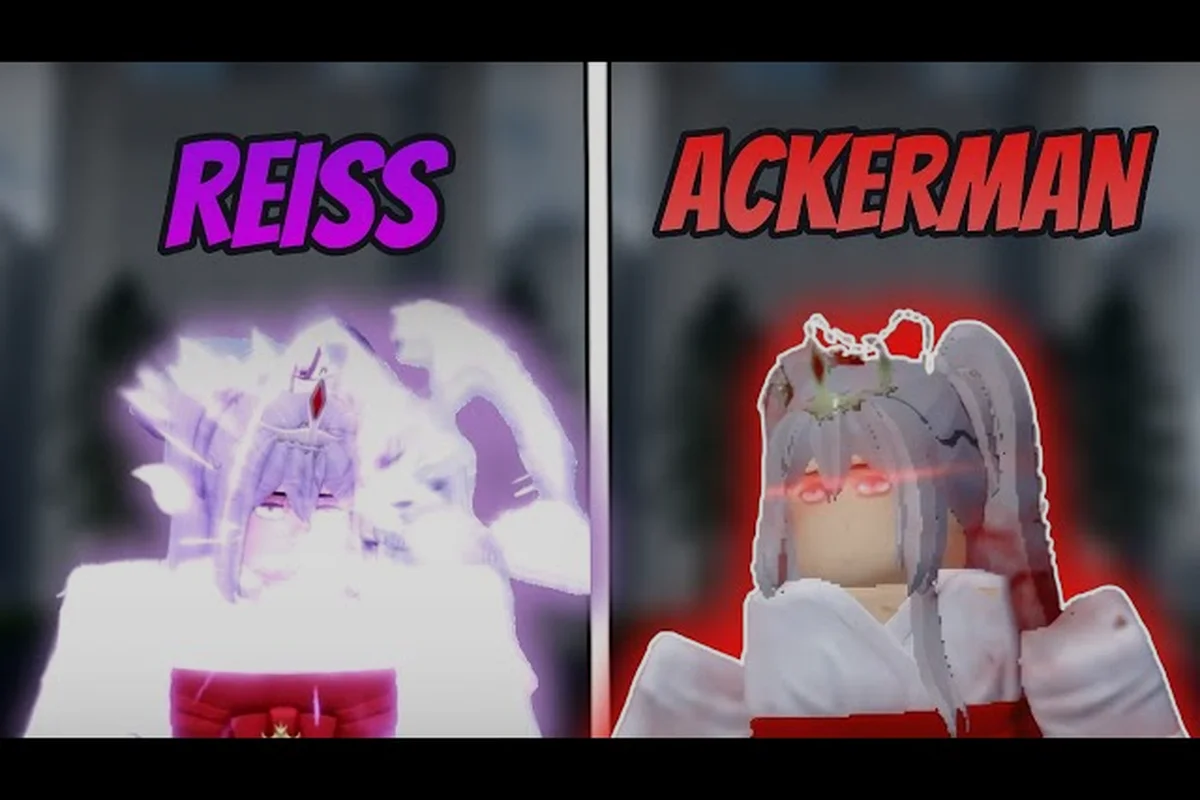
The Reiss family passive strengthens the core attributes of your selected character, so its value depends on how well those bonuses align with your build rather than the family name alone. For example, a Reiss setup that improves Strength can increase Titan damage, while Agility-focused bonuses help you land critical hits and maintain combat momentum. Compare these effects with Shiki’s speed-oriented profile, Fritz’s balanced offense, and Helos’s stats to determine which family best complements your preferred playstyle.
Reiss Skills and Family Passives
The Reiss family is an important choice in Attack on Titan Revolution because its identity shapes how a build performs rather than simply adding one isolated stat. According to the Roblox's official page for the game, families sit beneath the equipment and perk layers, with a passive identity and separately equipped family skills. That makes the right selection important before you commit rare materials or grind a weaker family.
What the Reiss passive contributes
Reiss works best when the player wants a dependable family foundation that can support several different combat approaches. Its passive identity should be evaluated alongside the family skill slot, the stats already collected, and the enemies being tested. A strong passive becomes more valuable when it multiplies a balanced stat package, but it can waste resources if the remaining build has narrow bonuses.
| Build layer | What to inspect | Reiss decision point |
|---|---|---|
| Family passive | Continuous damage or sustained-combat value | Keep when it remains active through normal rotations |
| Family skill | Temporary or trigger-based bonus | Compare uptime with Shiki, Fritz, and Helos |
| Gear stats | Damage, speed, stamina, or survivability | Favor stats the passive can amplify |
| Perks | Modifiers that reward a clear combat pattern | Avoid choosing Reiss for an unrelated perk goal |
Players often treat family skills as a final decoration rather than a core stat layer. The better approach is to identify the build multiplier first, then determine whether the Reiss passive consistently improves that multiplier’s practical output. For example, if the family skill scales damage from a balanced attack-speed and damage setup, a continuous-damage passive can turn each rotation into stronger cumulative results; however, a narrow speed-focused setup may gain less value from the same passive. Comparing that timing with Shiki, Fritz, or Helos also clarifies whether Reiss offers better uptime for the player’s chosen rotation.
Choosing Reiss over another family
The attack on Titan Revolution Reiss skills are not universally superior to every alternative. Shiki, Fritz, and Helos each present a different strategic identity, and their value depends on the build underneath them. Consider reroll costs before replacing a family, or review the family reroll cost guide before spending scarce resources on a quick switch.
| Consideration | Reiss-focused build | Alternative build |
|---|---|---|
| Preferred stat package | Broad or sustained damage | Speed, burst, or defense specialization |
| Combat rhythm | Repeated rotations and extended fights | Rapid burst windows or safer repositioning |
| Main priority | Passive value across multiple encounters | A particularly strong conditional skill |
| Upgrade decision | Retain when the passive scales well | Reroll only after checking total progression loss |
This comparison is more reliable than labeling one family as a universal winner because the same passive can perform differently at low and high progression. A family that feels modest during early training may become more valuable when stronger base stats reduce the relative weight of an isolated bonus.
Reiss Skills Compared with Shiki, Fritz, and Helos
A useful Attack on Titan Revolution family skills comparison looks beyond the displayed icon and asks when the effect begins, how long it lasts, and which part of the rotation benefits. Since the official game page identifies families as a rarity layer with separate passive and skill systems, evaluating each layer independently produces a more honest result than treating the family name as a single package.
Shiki family comparison
The attack on titan revolution Shiki family should be judged by the consistency of its combat tempo. Shiki is especially relevant when the player wants a build that converts steady attacks into meaningful pressure without relying on a single burst moment. That makes it a useful benchmark against Reiss rather than a direct replacement. Community gameplay showcases can support these qualitative judgments, but they should not be treated as a controlled benchmark. A useful community reference is Mightfreedy’s family ranking video, which can show how different families appear in real builds and encounters.
| Evaluation point | Reiss | Shiki |
|---|---|---|
| Build shape | Sustained family multiplier | Consistent attack-rhythm enhancement |
| Best synergy | Stats that benefit from repeated use | Fast, repeatable attack patterns |
| Main risk | Passive underperforms with mismatched stats | Bonus feels generic without attack speed |
| Evaluation method | Compare total output over a full encounter | Compare time required to reach peak pressure |
Fritz family comparison
The attack on titan revolution Fritz family offers a distinct comparison point because players often evaluate it through the strength of its immediate offensive payoff. That immediate impact can feel excellent in a short test, although the best family is the one that remains useful across the missions you actually repeat. Check both the opening burst and the weaker part of each fight before deciding.
| Test stage | What to watch | Decision value |
|---|---|---|
| Opening seconds | Initial damage and attack speed | Shows immediate ceiling |
| Mid-fight | Whether the bonus persists or requires ideal positioning | Shows practical uptime |
| Repeated clear | Performance after cooldown or trigger conditions | Shows sustainable value |
| Full build | Effect alongside the best available gear | Reveals the real marginal gain |
Fritz should receive credit for what it improves directly, not for an assumed archetype. Its opening-seconds damage and attack-speed boost can look stronger than Reiss’s early hit value, but if that active bonus requires tight positioning or has limited uptime, Reiss may sustain more total damage through its passive trigger working across the mid-fight and repeated-clear stages. Judge both families by damage per active window and passive contribution over a full rotation, rather than by their highest single burst.
Helos family comparison
The attack on titan revolution Helos family is worth examining for players whose preferred playstyle emphasizes reliable survivability and consistent encounters. A defensive advantage can be more valuable than raw damage when a build loses health, stamina, or attack opportunities to incoming pressure. The right test is how much damage the build actually converts during a complete encounter.
| Metric | Reiss-oriented result | Helos-oriented result |
|---|---|---|
| Damage potential | Depends on passive uptime | Depends on surviving enough attack windows |
| Risk tolerance | Moderate to high | Can support slower, safer rotations |
| Build requirement | Needs relevant multipliers | Needs enough offense to convert defense into wins |
| Best test | Standard and repeated content | Long or punishing encounters |
Avoid assuming that defense automatically creates a stronger build. Helos still needs enough damage to finish within practical time limits, while Reiss needs enough speed and stamina to keep the passive’s advantage relevant: if stamina drains before a rotation can land, the defensive window is wasted; if damage is too low to convert that window into eliminations, the build stalls in prolonged fights. The comparison table therefore points to a trade-off—Reiss-oriented skills depend on passive uptime, whereas Helos-oriented skills depend on preserving enough stamina and health to create safe attack opportunities and turn them into consistent wins.
Fritz vs Helos
The Attack on Titan Revolution Fritz vs Helos decision ultimately depends on whether the player values concentrated offense or dependable completion. Fritz-oriented players can favor immediate pressure and explosive windows, while Helos-oriented players can turn careful positioning into more consistent clears. The family that looks better in a damage test may still lose when resources, downtime, and encounter length are included.
Offensive versus dependable performance
A fair Fritz vs Helos test should use the same character level, comparable gear quality, and the same mission. Record not only the clear time but also the portion of that time spent dealing pressure. If Fritz creates a large opening advantage but fades later, while Helos maintains steady damage with fewer interruptions, their practical value can be much closer than the opening screen suggests.
| Test metric | Fritz | Helos |
|---|---|---|
| Peak performance | Strong early or burst-oriented damage | Consistent output across the encounter |
| Resource behavior | May depend on tighter execution | Often better suited to controlled spacing |
| Failure risk | High upside but costly mistakes | Lower pressure with a slower ramp |
| Best fit | Skilled players seeking fast clears | Players prioritizing reliable progress |
The official game page’s distinction between passive identity and family skills is especially relevant when judging Reiss alongside the Shiki, Fritz, and Helos families. A visible family skill may attract attention, but the associated passive determines when its effect activates and whether it remains useful throughout a mission. For example, a player can value the Shiki family skill for burst damage while ignoring the passive that improves sustained pressure, leading to a misleading conclusion about which family performs better in the Fritz vs Helos comparison.
Which choice is easier to build?
Availability of supporting stats can decide the comparison before skill descriptions do. If your gear already supplies the attributes required by Fritz, forcing a Helos build may waste the progress you have made. Conversely, a defensive passive can amplify a set of stable bonuses that are easier to maintain.
-
Choose Fritz-oriented progression when your current gear, perks, and combat timing already support burst-oriented play.
-
Choose Helos-oriented progression when you want fewer punishing mistakes and favor sustainable encounters.
-
Keep Reiss when your stat package is balanced enough for a passive multiplier to remain consistently useful.
-
Test any reroll with the same encounter length and the same gear before making the final decision.
Best Reiss Builds by Playstyle
The best Reiss build is not a single equipment list; it is a coherent package that keeps the passive relevant. Players who enjoy sustained offense, balanced stat gains, or long missions can each make the Reiss family work, provided they avoid stacking bonuses that demand an entirely different playstyle.
Balanced damage build
A balanced build is the safest starting point for Reiss because it reduces the risk that the passive multiplies an unusable stat. Prioritize repeatable damage, adequate stamina, and normal attack speed before adding narrow conditions. This approach also makes comparisons easier because the family’s contribution is less likely to be confused with the strength of the base gear.
| Priority | Stat role | Why it supports Reiss |
|---|---|---|
| First | Consistent damage | Keeps the passive relevant throughout combat |
| Second | Attack speed | Increases the number of effective rotations |
| Third | Stamina | Protects the player from losing attack uptime |
| Fourth | Survivability | Prevents avoidable interruptions |
If your goal is a damage-focused setup, the critical damage build guide can provide a useful comparison point. Treat its crit assumptions as one test rather than assuming that a critical hit multiplier will automatically make Reiss stronger than a smoother offensive build.
Solo progression build
Solo play values consistency because the player cannot rely on a teammate to cover weak attack windows or create openings. A Reiss build for solo progression should therefore balance offense with enough stamina and durability to complete ordinary missions without repeated mistakes. The best raid guide is useful for identifying demanding encounters where a dependable build is more valuable than a narrow burst setup.
| Progression stage | Reiss focus | Common mistake |
|---|---|---|
| Early development | Broad stats and basic uptime | Rerolling before understanding the passive |
| Mid-game gear | Stronger multipliers with stable speed | Chasing one skill that rarely activates |
| Late-game farming | Reliable clears and resource efficiency | Ignoring stamina breaks and downtime |
| Difficult content | Enough offense to finish safely | Treating pure defense as sufficient damage |
Aggressive damage build
An aggressive build can still use Reiss when every stat contributes to rapid, repeated attacks. The passive should remain active across enough rotations that its benefit is not limited to a single opening. This approach works best when the player maintains attack speed, understands the enemy’s attack pattern, and can turn brief openings into sustained pressure rather than one oversized burst.
Defensive hybrid build
A defensive hybrid can make Reiss attractive when the family passive supports consistent combat rather than a fragile burst. The build still needs meaningful offense because passive uptime has little value if the player cannot threaten the enemy. Test this setup against Helos with the same gear, and compare total clear efficiency rather than survival time alone.
How to Evaluate and Equip Reiss Family Skills: Shiki Family
Evaluating Attack on Titan Revolution family skills correctly requires more than checking whether the skill text looks attractive. Because family skills are equipped separately from perks and memories, the player should inspect the active slot, confirm the passive’s interaction, and test the complete build before spending more materials.
A practical test routine
Use a repeatable encounter and change only one family layer at a time, because Reiss continuity can resemble a Shiki or Fritz damage boost even when the rotation feels different. For example, test Reiss against a mixed encounter, then repeat it with Shiki tempo or Fritz burst while preserving the same gear, perks, and attack pattern. Track not only the first hit but also the full damage window, interruption risk, stamina cost, and clear time; this isolates whether Reiss actually improves sustained combat rather than merely landing a strong opening strike.
-
Equip the candidate family and select the same family skill you intend to keep.
-
Record the starting encounter, preferably one with mixed offense and defense demands.
-
Note the first damage peak, sustained damage period, interruptions, and clear time.
-
Repeat with another family while keeping gear and perks unchanged.
-
Compare total useful damage rather than only the opening hit.
-
Keep the family that improves the entire rotation without creating a major stamina or survivability problem.
This method is especially important when comparing Reiss continuity, Shiki tempo, Fritz burst, and Helos consistency. If you have not equipped the family layer yet, the guide to equipping family skills explains where that selection fits into the broader build.
Reading the active effects correctly
Some effects appear impressive because their descriptions mention powerful bonuses, yet their real value depends on activation conditions. Read the timing language first: continuous effects reward uptime, while triggered effects reward positioning and encounter preparation. Then compare that requirement with your actual build and the missions on your progression path.
| Observation | What it suggests |
|---|---|
| Bonus applies through most of the fight | Reiss-style sustained value may translate well |
| Large opening spike followed by a lull | Burst-oriented comparison is stronger |
| Stable improvement with fewer interruptions | Defensive or reliable choice may fit better |
| Effect depends on a rare setup | Avoid building around it before testing |
Do not treat community videos as exact stat benchmarks. Creators such as OMEGA EX show real gameplay in the new-player progression video, but loadouts, missions, and enemy behavior differ. Use them to understand how the family feels and to identify practical setups, not to claim universal percentages.
Reiss, Shiki, Fritz, and Helos Decision Guide
The best Attack on Titan Revolution Reiss skills choice depends on your current progression, preferred risk level, and whether you value uptime, tempo, burst, or defensive consistency. Use the following decision guide to narrow the options before committing to a reroll.
Match the family to the combat objective
Choose the option that solves the actual problem in your build. If damage falls off between attack windows, sustained pressure may be more valuable than a larger opening hit. If small positioning mistakes repeatedly end the mission, reliability can produce better progress even when the damage ceiling is lower.
| Player priority | Best starting choice | Main reason |
|---|---|---|
| Broad, balanced stats | Reiss | A passive multiplier can fit several useful bonuses |
| Fast repeated attacks | Shiki | Attack-rhythm enhancement fits active rotations |
| Immediate offense | Fritz | Burst potential can reward precise openings |
| Consistent survival | Helos | Defensive reliability can reduce costly interruptions |
The broader family comparison guide can help establish where the selected family sits against other rolls. For the Reiss-specific decision, however, the best evidence comes from a controlled test with your own build because progression changes the value of nearly every family effect.
Make the final choice with evidence
A final reroll decision should use a simple record rather than an impression from a single opening. Compare the candidate’s active window, resource strain, and repeatable clear result across at least two mission types. If one family wins the fastest fight but loses the longer test, the slower build may be the better progression choice.
| Evidence | Action |
|---|---|
| Reiss improves both tests with no resource issue | Keep Reiss and refine the skill selection |
| Reiss gains are concentrated in one phase | Compare against Shiki or Fritz more carefully |
| Reiss protects the rotation but damage feels slow | Test Helos with equivalent gear |
| Results differ only slightly | Keep the cheaper option and conserve rerolls |
The core takeaway is straightforward: Reiss rewards a build that can use its passive consistently, while Shiki, Fritz, and Helos each emphasize a different combat rhythm. Test in real encounters, preserve your strongest progression options, and choose the package that produces reliable results rather than the one with the flashiest opening moment.
Frequently Asked Questions
Are Attack on Titan Revolution Reiss skills better than Shiki?
Reiss is usually more attractive when the player has broad, sustained stats and wants a passive that remains useful across repeated rotations. Shiki can be the stronger choice for a fast attack-rhythm build because it fits a more specialized tempo. Compare both with the same gear, missions, and skill slot before deciding, since progression changes how much each effect contributes.
Should I keep Reiss instead of rerolling for Fritz?
Keep Reiss when its passive consistently improves your current stat package and you already understand its skill behavior. Reroll for Fritz when your build is clearly suited to burst damage and the restart cost will not delay progression. First test Reiss across at least two encounter types; an attractive opening result from Fritz is not enough by itself.
Is the Helos family better for beginners?
Helos can suit beginners because dependable performance often reduces the impact of small mistakes and inconsistent execution. It still needs enough damage to finish missions within practical limits, so defense should not be treated as a complete substitute for offense. New players should compare equal-quality gear and focus on total clear efficiency rather than survival alone.
Which skills work best with the Reiss passive?
The best companion skills are those with dependable activation and bonuses that remain active during normal combat rotations. A family skill with excellent theoretical damage but rare trigger conditions may contribute less than a consistent effect. Prioritize attack speed, stamina, and relevant damage multipliers, then test whether the combined passive and skill improve the full encounter instead of only its opening phase.