
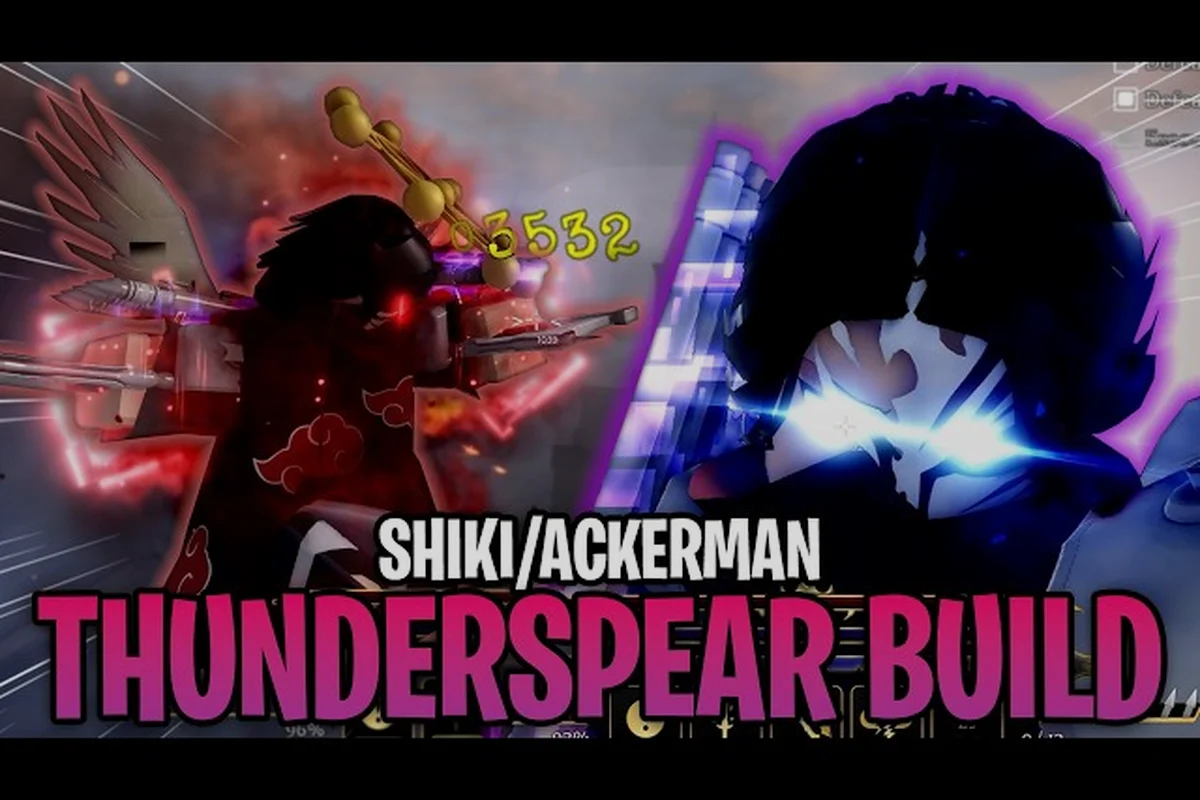
Attack on Titan Revolution crit build planning matters because small weapon, perk, and artifact improvements can raise wave damage without changing your play style. The right choices turn those upgrades into consistent critical hits, stronger solo runs, and a more effective attacks-on-titan-revolution waves build.
Crit Build Overview
The strongest Attack on Titan Revolution crit build is not created by selecting one oversized stat. It comes from aligning five layers: weapon family, rolled perks, artifact effect, memory slots, and the Update 5 vessel slot. Because each layer farms or rolls separately, the order of your investments matters more than chasing a theoretical maximum.
The Roblox's official page for the game identifies the build around five connected layers. Community gameplay guidance also emphasizes that Blade ODM Gear is the usual scout choice because it supports fast nape cuts, high movement uptime, and critical-leaning rolls. Thunder Spear is more specialized, sacrificing mobility for concentrated single-target damage.
| Build layer | Main purpose | Best investment timing | Common mistake |
|---|---|---|---|
| Weapon family | Defines the passive and combat rhythm | Before perk farming | Switching families after stacking the wrong perks |
| Perks | Adds direct damage and critical potential | After family selection | Spreading limited rolls too broadly |
| Artifact | Adds a repeatable combat effect | When one route is stable | Upgrading an artifact without checking its category |
| Memories | Improves attributes and supporting behavior | After core weapon power | Chasing empty slots too early |
| Vessel | Adds the newest supporting layer | Late in the progression path | Assuming community-tested unlocks are guaranteed |
This layered structure makes the Attack on Titan Revolution damage build easier to manage. Start with a weapon family that matches the encounter, preserve enough currency to improve ODM gear, gas, and blades, and only then refine the smaller layers. That approach produces a practical Attack on Titan Revolution early game build without requiring every available system to be maxed immediately.
Weapon Families and Crit Priorities
Weapon choice determines what your critical hits are built around. A crit-focused setup needs reliable attack uptime, a usable connection range, and enough maneuverability to reach the weak points. A weapon can have an impressive theoretical ceiling, yet it still underperform if its attacks are difficult to land or require resources you cannot maintain during repeated wave runs.
Blade ODM Gear for Fast Critical Hits
Blade ODM Gear is the most natural foundation for a crit-oriented scout. Its strength comes from the combination of speed, reach, and access to titan napes. These characteristics create more opportunities to land a damaging strike before a target reacts or turns, while movement uptime allows you to preserve the critical setup instead of spending it all on repositioning.
| Weapon consideration | Blade ODM Gear | Thunder Spear | Practical decision |
|---|---|---|---|
| Mobility | High | Lower | Prefer blades for frequent repositioning |
| Attack speed | Fast | Less frequent | Blades reward repeated engagement |
| Single-target burst | Moderate | High | Use the spear when one target is the priority |
| Critical hit consistency | Strong under active play | Build-dependent | Blades make crit timing more accessible |
| Best role | Scout and wave clearing | Heavy single-target damage | Match the weapon to the encounter |
The best-perk choices can be reviewed in the perks guide for critical and damage options. The important point is that a critical roll only creates value when the weapon can use it. Blade ODM Gear naturally converts speed into attack volume, making it easier to maintain crit-oriented stats during a sustained wave rather than requiring one perfectly timed opening.
Thunder Spear for Focused Burst
Thunder Spear trades some of that freedom for heavier single-target pressure. It can be attractive when a mission centers on one elite target or when you want fewer attacks with greater impact. However, a Thunder Spear setup should still preserve enough speed and stamina management to land consecutive hits. Otherwise, the theoretical damage of each swing remains irrelevant because the enemy gets too many actions between them.
| Build goal | Blade-focused route | Thunder Spear route | Better early choice |
|---|---|---|---|
| Repeated critical hits | Excellent | Moderate | Blade-focused route |
| Boss-style damage | Moderate | Excellent | Thunder Spear route |
| Escaping incoming attacks | Easy | More demanding | Blade-focused route |
| Simple solo progression | Low risk | Higher risk | Blade-focused route |
| Resource efficiency | Strong with active movement | Depends on timing | Upgrade both blade and gas early |
Do not treat the crit rate as the only measure of a DPS build. Effective critical DPS depends on attack speed, positioning, and the number of strikes you can complete. Luck helps you find better drops, but it is not itself a damage stat, so the practical Attack on Titan Revolution dps build should prioritize repeatable offense over farming for a number that does not directly increase hit strength.
Perks, Artifacts, and Memory Choices
Once the weapon family is settled, treat every roll as part of a route. The official game-page structure explains why investments should follow a sequence: the family establishes the passive and skill behavior, perks reinforce it, and artifacts, memories, and vessels add supporting power. Each layer can roll or farm separately, so improving all of them at once can weaken your first real power spike.
Roll Perks Around the Weapon Passive
A clean crit setup starts with offensive perks that directly improve hit frequency or hit strength. Percentage-based bonuses generally work well because they scale with the rest of the weapon build. Avoid filling early perk slots with weak supporting values simply because they are inexpensive. Those values may improve the character, but they do little to make the Attack on Titan Revolution damage build sharper when every encounter depends on your opening damage.
| Perk target | Build value | Early priority | Reason |
|---|---|---|---|
| Critical chance | Very high | High | Increases the frequency of stronger hits |
| Critical damage | Very high | High | Improves the payoff from each successful crit |
| Attack speed | High | Medium-High | Supports repeated attacks and movement uptime |
| Damage percentage | High | Medium-High | Strengthens every damaging strike |
| Flat damage | Moderate | Medium | Useful but less scalable than percentage scaling |
| Luck | Low for damage | Low | Helps farming rather than increasing combat output |
The critical chance–critical damage pairing is the most important relationship in this build. If one side is strong and the other remains weak, the weapon feels inconsistent: critical hits happen often but lack impact, or each crit is powerful but rare. Compare the current rolls before committing more currency, and save early perk rerolls for slots that clearly affect damage output.
Match Artifacts to the Route
Artifacts are best treated as finishing pieces around a stable weapon plan. Read the effect first and ask whether it rewards the behavior you already use. A bonus that fits repeated blade attacks is more valuable than a nominally larger number that does not support the rest of the build. This is especially important for an attacks-on-titan-revolution waves build, where consistency across many enemies matters more than one spectacular opening.
| Artifact behavior | Best fit | Build result | Caveat |
|---|---|---|---|
| Rewards successful critical attacks | Blade-focused scout | More value from each landed crit | Requires consistent crit uptime |
| Rewards consecutive attacks | Fast weapon route | Higher sustained pressure | Breaks when positioning fails |
| Rewards precise weak-point hits | Skilled solo route | Encourages accuracy | Demands better movement |
| Rewards a weapon-specific effect | Matching family | Strong synergy | Less flexible after family changes |
Memories fill the supporting role around these choices. Prioritize attributes that protect uptime, improve attack speed, or support the crit payoff. Do not place premium memories into empty slots before the core weapon and its most relevant perks are functioning. Once the core layers cooperate, memories become a reliable way to turn a good weapon into a strong attacks-on-titan-revolution mid game build.
Early Game Upgrade Order
An Attack on Titan Revolution early game build should create one complete damage loop before chasing advanced gear. That means enough movement to attack safely, enough gas to use the weapon’s range, and enough blade power to make a successful strike worthwhile. Spreading every resource across the full build may make each individual upgrade appear balanced, yet it delays the point where your damage can visibly outperform the baseline setup. Follow this progression sequence:
Build the First Functional Power Spike
-
Choose a weapon family first. Blade ODM Gear offers the easiest critical-hit foundation because movement and attack speed support repeated engagement.
-
Upgrade the movement and attack tools. Improve gas and blades before chasing a large artifact or memory that provides a small percentage increase.
-
Roll for critical chance and critical damage. These perks should complement the weapon passive instead of creating a separate build around one lucky slot.
-
Select one artifact with clear combat value. A bonus that rewards critical hits or consecutive attacks usually fits a scout better than a passive farming-oriented effect.
-
Add memories after the core loop works. Use them to strengthen attack speed, survivability, and the attributes that support consistent critical opportunities.
| Upgrade stage | Main resource focus | Expected benefit | Resist the temptation to |
|---|---|---|---|
| First power spike | ODM gear, gas, and blades | Better movement and hit reliability | Buying every memory slot |
| Perk refinement | Critical chance, critical damage, attack speed | Higher scaled output | Rerolling one slot repeatedly |
| Artifact selection | One build-compatible effect | Added damage synergy | Chasing an unrelated effect |
| Memory completion | Core attributes and set bonuses | Stronger overall performance | Spreading across incompatible bonuses |
This order also makes the Attack on Titan Revolution solo build safer. A solo player cannot rely on a teammate to create attacks, intercept damage, or expose a target. Every upgrade should therefore improve either your damage during a real engagement or the number of clean engagements you can survive. Once those basics are secure, compare the broader late-game build path to plan the next resource phase.
Mid Game and Solo Progression
Mid-game refinement is where the build stops being a collection of unrelated bonuses and becomes a coherent routine. You should be able to explain which perk supports the weapon passive, what the artifact rewards, and how your memories preserve attack uptime. If any part of that explanation is vague, focus future upgrades on completing the missing relationship rather than adding another isolated percentage.
Turn the Build into a Repeatable Routine
A strong solo player builds around a predictable cycle: approach with sufficient gas, create a safe critical opening, reposition after the strike, and repeat. This cycle matters because crit-focused builds often suffer from poor consistency. A high theoretical maximum is less useful than a setup that can reach the same favorable conditions several times during a mission.
| Combat scenario | Main priority | Weapon behavior | Build adjustment |
|---|---|---|---|
| Low-level wave | Clean, fast clears | Blade ODM Gear | Keep movement and gas strong |
| Repeated elite target | Heavy opening damage | Thunder Spear or burst-focused blade route | Raise critical damage and impact |
| Solo mission | Predictable recovery | Both styles | Prioritize stamina and survivability |
| Long boss encounter | Repeatable hits | Whichever family you handle best | Preserve attack speed and uptime |
Use community footage as a visual test rather than a formula. The verified fast build walkthrough by Robomajing demonstrates the broader sequence of choosing a family before specializing the surrounding layers. Another community guide, going from noob to pro by OMEGA EX, can help with practical movement and early progression decisions. Neither video overrides your in-game results, but both provide useful visual references for weapon behavior.
Account for Uncertain Additions
Some powerful-looking community setups may depend on features or unlocks that are not confirmed in official patch notes. Divine perks, Vessel access, and Beast Titan-related claims should therefore be treated as community-tested information, not guaranteed requirements. The build should remain strong if those additions are unavailable, with the Vessel treated as an optional supporting slot rather than the foundation of your damage plan.
This caution is especially important for progression planning. A setup that requires three uncertain unlocks is fragile, while one that works through Blade ODM Gear, critical perks, and a compatible artifact remains useful in ordinary play. You can then add advanced layers when they become available and clearly verified.
Stat Priority and Build Maintenance
A crit build needs more than maximum paper damage. Stat priority should preserve attack uptime, because a bonus that is never activated contributes little to real combat performance. You also want the character to survive long enough to exploit the build. Survivability is not a separate objective from DPS; it determines how many damage opportunities you can safely create.
| Priority order | Stat category | Purpose | Common mistake |
|---|---|---|---|
| 1 | Critical chance and critical damage | Increases the strength of the core damage loop | Focusing on only one side |
| 2 | Attack speed and weapon damage | Improves repeated or heavy attacks | Ignoring family compatibility |
| 3 | Movement, stamina, and gas efficiency | Protects attack uptime | Upgrading damage before the tools used to attack |
| 4 | Survivability attributes | Increases successful engagement count | Using the final defensive slot for a tiny farming bonus |
| 5 | Luck | Improves acquisition efficiency | Treating it as direct combat power |
Compare stat choices against the Fritz build stat priorities when you need a clearer distinction between raw attributes and weapon-specific bonuses. The same visible percentage can affect the build differently depending on where it sits, so read the full effect before replacing a slot.
Maintenance is simple but important. Revisit perks after every major weapon change, test one artifact swap at a time, and avoid automatic equipment swaps outside the combat area. When a replacement is clearly worse, keep the older setup. A crit build depends on efficient damage during every available opening, not on wearing the newest item regardless of its actual effect.
Frequently Asked Questions
What is the best weapon for an Attack on Titan Revolution crit build?
Blade ODM Gear is the strongest default foundation because its speed, reach, and mobility make repeated critical openings easier to create. Thunder Spear can be better for concentrated single-target damage, but only when you can reliably position and land heavy hits. Choose the family that matches your mission before optimizing perks around it.
Should crit chance or crit damage receive more focus?
Neither side should be neglected because critical chance creates the hit and critical damage determines its payoff. Compare your current weapon rolls, then improve the weaker side when resources are limited. A balanced pair usually creates a more consistent damage build than one enormous stat paired with an underpowered opposite stat.
Does luck improve damage in Attack on Titan Revolution?
Luck is primarily a farming and acquisition stat, not a direct damage stat. It may help you find stronger gear, artifacts, or memories over time, but it does not make each critical hit stronger. Prioritize attack speed, weapon damage, critical chance, critical damage, and the attributes that keep you attacking safely.
Can an early-game crit setup handle solo missions?
Yes, if you build around a functional damage loop rather than unfinished equipment. Improve ODM gear, gas, and blades first, then add critical perks, one compatible artifact, and useful memories. Keep movement and stamina strong because a solo player must both create and protect every damage opening.
When should I switch from an early game build to a mid-game setup?
Switch when your current weapon, perks, and artifact already work together and upgrades are starting to replace basic combat needs. At that point, improve critical payoff, complete valuable memory slots, and test advanced community-reported additions cautiously. Do not abandon a stable setup merely because a stronger component arrives without a compatible replacement.