
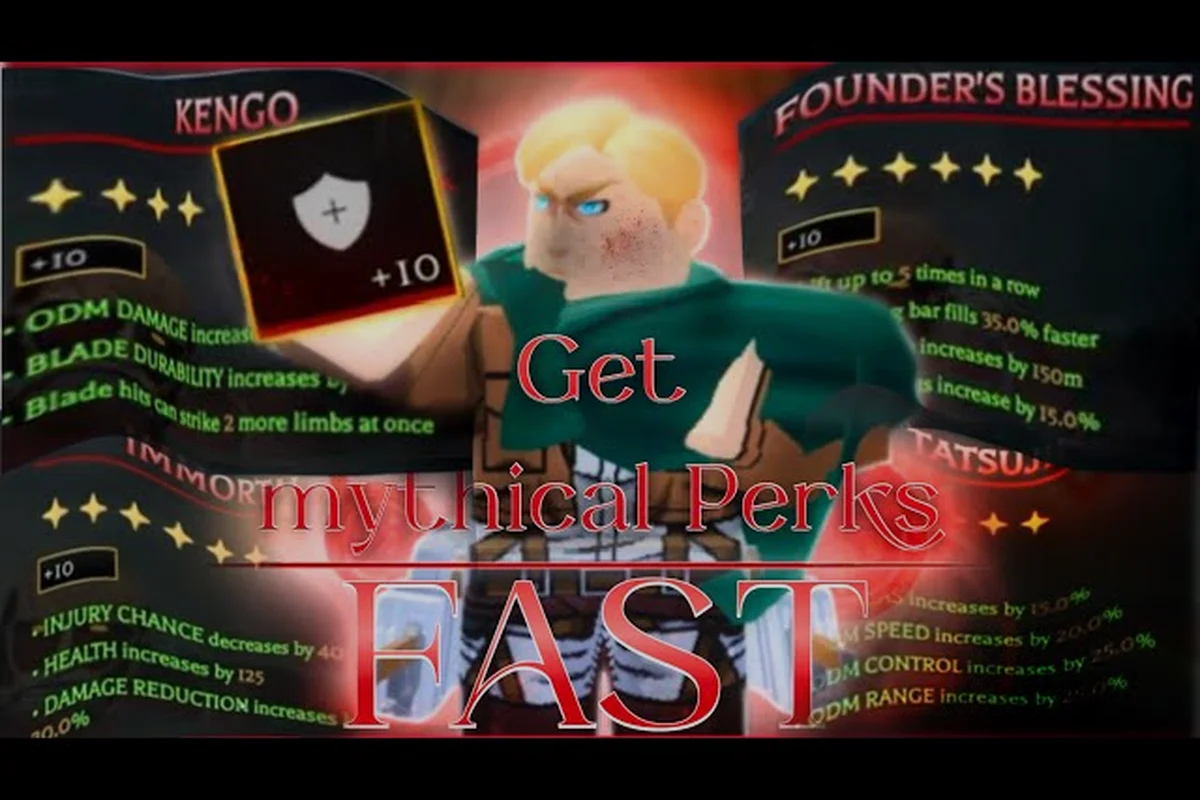
Attack on Titan Revolution perk slot decisions determine how much of a roll’s value reaches your build. Use this guide to manage slots, prioritize upgrades, and turn luck boosts into stronger damage or support combinations without wasting resources. A practical starting point is to reserve slots for your core combat perks, then use remaining capacity for luck or support effects rather than stacking the same category. For example, a high-luck roll can amplify a damage-focused perk build, but its usefulness still depends on how consistently that perk is triggered during combat. Before committing resources, compare the perk upgrade cost against the expected benefit and avoid spending on a slot that duplicates an effect already active in your build.
Understanding Attack on Titan Revolution Perk Slots
The perk slot system is where a rarity label becomes useful: a strong roll only improves your character when it occupies a slot that supports your weapon, movement style, and preferred playstyle. The official the Roblox listing for the game identifies the perk layer as a major stat lever, with perks spanning Common, Rare, Epic, Legendary, Mythic, and the community-documented Divine tier added in Update 5.
That last tier needs careful wording. Community reports describe Divine perks as a new rarity band above Mythic, while official drop rates have not been published. Treat specific Divine probabilities as unconfirmed rather than planning around a number that may change.
Rarity Does Not Equal Build Value
A Mythic roll can be less useful than a Rare roll if its stat conflicts with your setup. Compare every new result against the equipment that currently receives your best damage bonus. Blade ODM, Thunder Spear, shifter, and support approaches do not need identical perks, even though they all draw from the same families and slots.
| Perk quality | What it indicates | Practical decision |
|---|---|---|
| Common or Rare | Solid early contribution | Equip when it fills an empty slot or replaces a weaker stat |
| Epic | Meaningful upgrade | Keep if it matches the active weapon or build |
| Legendary | High-value roll | Save or reroll if another stat would produce more damage |
| Mythic | Top standard tier | Evaluate by marginal gain, not rarity alone |
| Divine | Community-documented top tier | Treat details as version-dependent and verify in-game |
Slot contribution is the decisive comparison, not the colorful rarity label. A Divine damage perk can still lose to an Epic movement perk when the latter makes it easier to maintain an attack pattern against the game’s larger threats.
How Many Perks Should a Build Keep?
Players frequently ask how many perks are practical to keep. The reliable answer is to fill the slots your account has available, then remove only the rolls that do not contribute meaningfully. Exact slot totals can change with updates, so use the visible interface in the current game version rather than relying on an outdated fixed number.
| Build stage | Recommended approach | Slot-management goal |
|---|---|---|
| Early game | Equip every useful stat | Cover basic damage and movement needs |
| Mid game | Remove redundant low-impact rolls | Concentrate bonuses around the main weapon |
| Late game | Test every rare or higher roll | Preserve the highest marginal stat gain |
| Divine farming | Avoid automatic rerolls | Compare current and potential Divine results |
This approach also helps answer Attack on Titan Revolution how many perks questions without inventing a number. The practical limit is whatever the equipped interface permits, while the effective limit is the number of bonuses your build can convert into useful combat performance.
Upgrade Priorities for Attack on Titan Revolution Perks
A perk upgrade should be evaluated by the value it adds after your current equipment and playstyle are considered. The best perk combination is often a balance of dependable core stats and one build-defining bonus, rather than several rolls that duplicate one another.
Start With the Weapon You Actually Use
The active weapon changes the value of every comparison. Blade ODM scaling rewards attack speed, movement, and sustained close-range damage, while Thunder Spear burst favors a stronger initial hit and accurate positioning. Support and movement choices should improve the conditions needed to deliver those hits.
| Primary style | First perk priority | Secondary priority | Lowest priority |
|---|---|---|---|
| Blade ODM | Attack speed or sustained damage | Movement or stamina support | Minor bonuses unrelated to uptime |
| Thunder Spear | Initial damage or critical output | Reload and positioning support | Weak secondary damage that delays the burst |
| Shifter-focused | Form-specific combat value | Survival and ability uptime | Low-impact farming statistics |
| General support | Consistent uptime | Health and movement | Narrow bonuses that rarely affect teammates |
When comparing two rolls, calculate the marginal damage value of the change. If replacing a reliable attack-speed bonus with a large but inaccessible critical stat reduces your uptime, the apparent upgrade may actually lower real damage. The best-perk damage breakdown provides a useful framework for making those comparisons.
Decide What a Roll Must Protect
Before rerolling, define the nonnegotiable stat. A strong roll can justify sacrificing one secondary value, but it should not undermine your primary attack condition. This prevents a common mistake: treating every slot as a fresh opportunity for maximum damage instead of part of a coordinated loadout.
Upgrade threshold checklist:
-
The perk raises damage without reducing a needed combat condition.
-
The perk supports the weapon you use most often.
-
The slot receives a larger increase than the perk currently equipped.
-
The result remains useful after your next expected gear upgrade.
-
A reroll would cost less than the expected value of the replacement.
This is where Attack on Titan Revolution perk upgrade decisions become consistent: compare a reroll against the perk slot’s current value, not against the highest possible roll. For example, if a damage perk already exceeds the slot’s current roll and preserves your required combat condition, keep it; reroll only when the likely upgrade is worth the cost of the Attack on Titan Revolution perk luck resources and Attack on Titan Revolution luck potion perks you would spend. This approach also helps when deciding Attack on Titan Revolution how many perks to retain, because every slot should contribute to the loadout rather than compete with it for attention.
Luck Potions and High-Quality Perk Rolls
Luck in this game affects roll quality rather than directly increasing damage. According to the verified Divine perk farming route from Pixel blox, players can improve their reroll sessions by using Divine Fragments and stacking luck before spending spins. The video is community gameplay guidance rather than an official drop-rate source.
This distinction is essential. A lucky session may produce a more valuable perk, but the perk still needs to fit an open or replaceable slot. If your build is already complete and the new result duplicates an existing bonus, luck has improved rarity without improving actual performance.
A Practical Luck Session
| Step | Action | Reason |
|---|---|---|
| 1 | Finalize the weapon and desired stat | Prevents luck from producing an irrelevant roll |
| 2 | Check available slots | Keeps room for an immediate upgrade |
| 3 | Activate the strongest available luck effect | Raises the quality of the reroll session |
| 4 | Spend spins in a controlled batch | Protects resources from low-value spending |
| 5 | Keep only rolls with strong marginal value | Converts rarity into build improvement |
| 6 | Save remaining potions for a better target | Avoids wasting a boosted session |
This is the most useful interpretation of Attack on Titan Revolution luck potion perks: the potion acts as a multiplier on roll quality, but it does not choose the stat or determine whether a roll fits an open perk slot. For example, if your build needs a damage-oriented perk and the boosted roll offers only a less relevant stat, reroll it rather than filling the slot with a weak upgrade. A strong result is useful only when it matches your weapon’s stat priorities and can replace a weaker perk without compromising the rest of your perk build.
Community data also notes that group membership provides bonuses of 5% XP and 5% gold, which can shorten the grind needed to fund future rerolls. These are community-reported economy details from the verified Roblox community page, so confirm them against your current interface if the bonus display changes.
Save Potions for the Right Target
The strongest potion is wasted when the family, weapon, or upgrade target is undecided. Wait until you know which slot needs improvement and whether multiple acceptable outcomes are possible. A session aimed at one narrow stat may waste spins; a broader target allows the random result to land on another valuable perk.
Luck timing rule: activate the potion only after identifying the perk slot, the replacement threshold, and the acceptable secondary stats. For example, if a sword slot needs a damage or speed improvement, treat either result as a successful roll and save the potion for a slot where the current bonus is below the intended tier. This preserves most of the luck potion’s quality benefit without requiring one exact outcome.
Building the Best Perk Combination for Each Weapon
The best perk combination is determined by the relationship between stats, not by stacking identical bonuses. Think of each equipped roll as one part of a repeatable combat loop: create space, maintain uptime, land the hit, and survive long enough to repeat it.
Blade ODM Build
Blade-focused builds need enough movement and attack speed to sustain pressure. A weapon-specific damage roll can be excellent, but it has limited value if stamina management or positioning prevents repeated strikes. Compare the perk with the practical output of your current blade configuration.
Core package:
-
An attack-speed or sustained-damage bonus
-
Movement or stamina efficiency for attack uptime
-
One stronger damage or critical roll to define the build
-
A final slot for survivability or flexible utility
Players who want more stat-specific choices can review the movement perk overview before filling the open perk slot in a Blade ODM Build. For example, swapping a modest attack-speed bonus for Movement Speed can improve ODM repositioning and help maintain pressure during repeated blade attacks; if the slot instead grants stamina efficiency, the gain is less visually obvious but can reduce the need to disengage. Compare the movement perk with your current blade configuration’s damage, critical chance, and stamina demands, since a stronger offensive roll is only worthwhile when the build can consistently land the next strike.
Thunder Spear Build
Thunder Spear play centers on a powerful burst, so its strongest combinations pair a large opening hit with enough positioning and reload support to repeat the sequence. A general-purpose set of small damage bonuses may produce steadier numbers, but it often fails to improve the decisive strike.
| Perk goal | Why it matters | Main risk |
|---|---|---|
| Initial damage | Improves the largest hit | Higher stat needs to remain accurate |
| Critical output | Adds burst potential | Low consistency without attack uptime |
| Reload support | Shortens repeated attack cycles | Less value if burst timing is already secure |
| Movement | Protects aim and spacing | No damage increase on its own |
Support and Survival Build
Support players benefit from longer survival and more opportunities to assist allies. A perk that improves health, movement, or ability uptime can create more team value than a small personal damage increase. The late-game build reference can help place such support bonuses within a broader gear plan.
Support principle: choose the perk that creates more useful actions rather than the one with the largest isolated number. For example, if one roll improves team-oriented survivability while another adds only a marginal damage bonus, the survivability roll can keep you active long enough to provide more support. Compare perk slots by uptime, survivability, and team contribution together, since a balanced roll may deliver more practical value than a narrow maximum.
Practical Perk Slot Management
Good perk slot management prevents the common trap of changing a complete build for a flashy result. Before rerolling an Attack on Titan Revolution perk slot, compare the candidate upgrade with the slot’s current role in your build—for example, whether it improves a damage-oriented Attack Type, Strength, Agility, or luck-related effect instead of replacing it with a conflicting roll. Keep a small buffer of available perk luck resources, test one candidate at a time, and retain the stronger result only when it produces a meaningful gain rather than merely a different stat.
The Seven-Step Roll Plan
-
Audit the current loadout. Record the active weapon, occupied slots, and the stat each perk contributes.
-
Define the bottleneck. Decide whether the problem is opening damage, attack speed, movement, survival, or roll quality.
-
Set a minimum acceptable gain. Compare the prospective perk with the current slot rather than with an imaginary perfect setup.
-
Apply luck only when the target is ready. A boosted reroll session makes more sense after the weapon and desired family are selected.
-
Test the new result in practice. Check damage, stamina behavior, positioning, and survival during ordinary missions.
-
Keep the change only if it improves real performance. A larger tooltip number may not translate into better results.
-
Bank the remaining resources. Save spins and potions for a more important upgrade target.
This process also improves Attack on Titan Revolution perk luck decisions because it separates randomness from decision quality. You cannot control the roll, but you can control the perk slot target, the comparison against the current stat, and the moment when luck potions or reroll resources are spent. For example, if the weapon already provides strong opening damage but lacks mobility, prioritize a movement perk in the relevant slot instead of chasing another damage roll. The key is to improve the overall perk build and perk combination, rather than optimizing one isolated tooltip value.
When to Keep, Reroll, or Remove
| Situation | Best action | Reason |
|---|---|---|
| New roll exceeds the current slot by a clear margin | Keep it | It creates meaningful marginal value |
| New roll is stronger but duplicates another bonus | Compare the entire build | Raw rarity can hide diminishing returns |
| Reroll replaced a solid stat with an untested max roll | Test before keeping | Potential does not equal consistent performance |
| No open slot and the new roll is weak | Keep current gear | The result does not justify a reroll |
| A Divine roll replaces a lower-tier core stat | Review both builds | Top rarity may not support the best combat loop |
Avoid Chasing the Rarity Label
A Divine roll can create excitement, but chasing rarity is risky when the underlying stat is redundant. Keep a new top-tier result if it materially improves the build or fills an empty slot. Otherwise, compare it with a stable combination that already performs well.
The key is slot fit. A strong roll in the wrong slot can underperform a moderate roll in the right one because perks gain value from the attributes they scale—such as Strength, Speed, or Agility—and from their assigned perk slot. For example, a damage-focused roll is more valuable in an offensive slot, while a weaker defensive roll may better complete a build that lacks survivability. Test each candidate with your current equipment and gear setup, since changing weapons, character stats, or equipped perks can alter which combination performs best.
Rare Rolls, Divine Perks, and Resource Limits
Divine perks may represent the newest top rarity band, but their exact acquisition details remain dependent on community testing and current Update 5 content. The official game page verifies the game’s perk layer and rarity progression, while community showcases provide the newer Divine context. Always label a specific probability as community-reported if you encounter one elsewhere.
Separate Confirmed and Community Information
| Detail | Verification status | Best use |
|---|---|---|
| Common through Mythic rarity bands | Confirmed by the official game page | General rarity planning |
| Divine as a band above Mythic | Community-documented in Update 5 | High-tier farming awareness |
| Exact Divine drop percentage | Not officially published | Avoid using as a fixed planning value |
| Divine Fragments as farming material | Community gameplay guidance | Route planning for current content |
| Luck affecting roll quality | Verified community guidance | Reroll-session preparation |
| 5% XP and 5% gold group bonuses | Community-reported | Rough progression and budget planning |
Because Update 5 can change materials, routes, or the perk interface, check the in-game notices before spending every resource. The Update 5 overview from Pixel blox provides additional community context, but it should be paired with the current official game page for authoritative game information.
Make Decisions Under a Budget
A budget turns random outcomes into manageable choices. Divide available spins into a core session, a bonus session, and a reserve. Use luck potions during the core session only when the target is clear, and reserve any remaining resources for a slot with a larger expected benefit.
Reserve rule: keep enough spins and luck resources to correct one important mistake without risking your entire perk economy. For example, save one or two spins for a missed perk slot result, but avoid spending every remaining luck potion perk on an uncertain reroll. If a rare roll changes several perk upgrade priorities at once, preserve the reserve until the perk build direction is clear; otherwise, a single failed correction can consume the budget needed for a high-impact combo.
Final Perk Slot Checklist
A strong Attack on Titan Revolution perk slot setup is coordinated, tested, and compatible with the weapon you actually equip. Review it after major gear changes, when new content rewards a different combat pattern, or whenever luck allows a meaningful replacement.
| Review area | Question to answer | Preferred outcome |
|---|---|---|
| Primary damage | Does the largest stat improve meaningful damage? | One clear offensive anchor |
| Attack uptime | Can you maintain the attack condition? | No conflicting slowdowns |
| Movement | Does positioning match the weapon? | Stable access to targets |
| Support | Do bonuses improve useful actions? | Practical team or survival value |
| Rarity | Is the label improving the build? | Quality without redundancy |
| Resources | Were spins and potions used intentionally? | A reserved budget remains |
The central takeaway is simple: slot value comes from build fit. A rare or Divine perk can be excellent, but only when it improves the stats your weapon and playstyle can use. Start with the weapon, define the desired stat, use luck at the right moment, and test the replacement in combat before treating it as an upgrade.
Frequently Asked Questions
How many perks should I equip in Attack on Titan Revolution?
Fill every available perk slot with a stat that contributes to your current setup, although the exact visible limit can change with updates. Remove redundant rolls when they do not improve damage, uptime, movement, or survival. Judge each slot by its effect on the weapon you use rather than by rarity alone.
What is the most important perk slot upgrade?
The most valuable upgrade is the one that raises damage without weakening the condition that lets you land attacks. For blade builds, attack speed and sustained output often take priority; for Thunder Spear builds, initial damage may matter more. Test the new perk in normal combat because the largest displayed value may not produce the best results.
Should I use luck potions for every perk reroll?
Save luck potions for a prepared reroll session with a clear target slot and an acceptable range of outcomes. Potions improve roll quality rather than damage, so they are less valuable when you have no room for the result. First finalize your weapon, family, and upgrade threshold, then activate the strongest available luck effect.
Is a Divine perk always better than a Mythic perk?
No. A Divine perk may have the highest rarity band, but it can duplicate a stat or conflict with your build. Compare its marginal value against the roll it replaces and consider whether the rest of your equipment supports it. The exact Divine acquisition route and drop details should be confirmed through current in-game information and community testing.
What makes the best perk combination for a damage build?
A strong damage combination usually combines one large offensive bonus with the stats that preserve attack uptime. A critical roll is valuable only when you can land attacks consistently, while movement can outperform a smaller damage bonus if it solves a real positioning problem. Compare the complete loadout rather than evaluating each perk in isolation.